

The reality of buying property in Malta in 2026 is less about speculative glamour and more about understanding a market where geography, planning regulations, residency considerations and lifestyle priorities intersect in ways that affect long-term value.
For overseas buyers, Malta occupies a distinctive position within Europe. English is widely spoken, the legal framework is familiar to many international purchasers and the country’s EU membership continues to underpin confidence among investors and relocating professionals alike. Yet the market itself is highly localised. Two apartments separated by a few streets can behave very differently in terms of rental demand, appreciation potential and day-to-day liveability.
That is precisely why detailed information regarding investing in Malta property matters so much. Success here rarely comes from chasing trends. It comes from matching the right property to the right purpose and engaging the service of a highly professional agency to assist you through the entire process.

Understanding the Maltese property market
The first thing prospective buyers should recognise is that Malta is not one uniform market. The pace, pricing and buyer profile shift noticeably between regions.
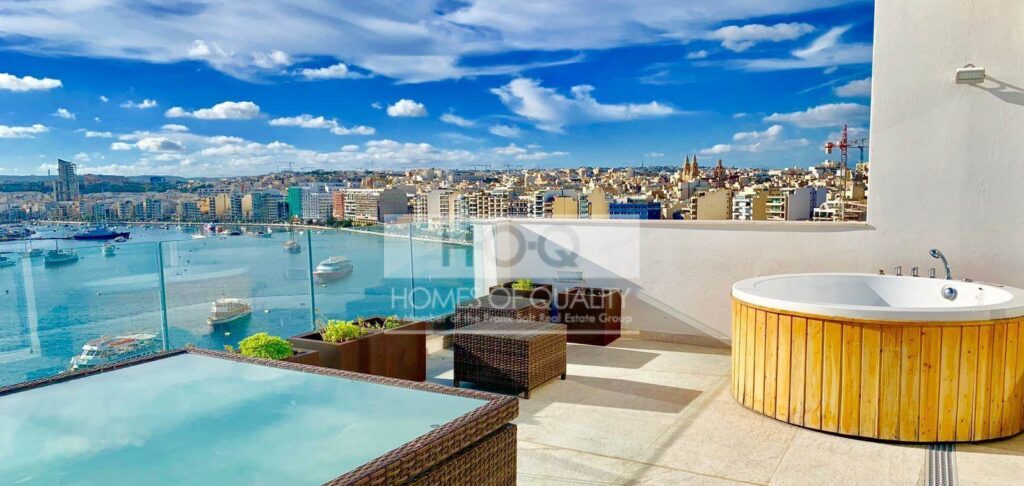
Areas such as Sliema and St Julian’s remain central to the premium apartment market. Demand is driven by international professionals, digital entrepreneurs and buyers seeking proximity to business districts, marinas and lifestyle amenities. Properties here tend to command some of the country’s highest prices per square metre, but they also offer resilient rental demand, particularly for long lets.
For buyers prioritising heritage and architectural character, Valletta and the Three Cities present a different proposition entirely. Restored townhouses and carefully converted period buildings appeal to purchasers looking for cultural depth rather than purely contemporary living. These areas often attract buyers with a long-term outlook who value scarcity and historical significance over rapid turnover.
Further north, Mellieha has developed into a compelling choice for buyers seeking more space and a slower pace without losing access to infrastructure. Larger villas and family homes are more common here, particularly among relocating families and semi-retired international buyers.
Meanwhile, Gozo continues to attract a separate category of purchaser altogether. The island’s appeal lies less in short-term investment performance and more in lifestyle: quieter villages, lower density development and a stronger sense of traditional Mediterranean living. Buyers considering Gozo are typically making a deliberate shift in pace rather than purely a financial decision.
Getting to grips with this requires more than browsing listings online. Homes of Quality, as part of the Frank Salt Real Estate Group, works across these varied local markets with services that extend beyond straightforward transactions. For overseas clients especially, understanding where to buy is often inseparable from relocation planning, tax considerations, rental strategy and long-term property management.
How to buy a house in Malta
For many international purchasers, the process of buying property in Malta is relatively accessible, though it does involve several legal and administrative stages that require careful coordination.
When buying property in Malta, many purchasers focus only on the agreed sale price together with the headline expenses such as stamp duty and notarial fees. In practice, however, the true cost of acquisition is usually higher once legal searches, registration expenses, architect reports, permit fees, financing costs and other ancillary charges are included. For most standard transactions, buyers should realistically budget an additional 6%–8% of the property value on top of the purchase price, although more complex purchases can exceed this range. On a €400,000 property, this can translate into approximately €24,000-€32,000 or more in supplementary costs depending on the circumstances.
Equally important is the time involved in completing a transaction. Although the Maltese property market is often presented as a straightforward two-step process – first the Promise of Sale (“Konvenju”), followed by the Final Deed – delays can arise from title searches, planning regularisation, mortgage approvals, inheritance complications or Acquisition of Immovable Property (AIP) permits for certain foreign buyers. Working with an experienced estate can help buyers identify potential issues early and navigate the process more efficiently.
Step-by-step: from offer to final deed
1. Offer and Promise of Sale (Preliminary Agreement)
Legal and financial considerations
Once an offer is accepted, the first formal stage is the signing of the Promise of Sale agreement, commonly referred to as the Konvenju. This preliminary contract is usually drafted by a notary and legally binds both parties subject to agreed conditions.
At this stage, buyers generally:
- Pay a deposit of approximately 10% of the agreed purchase price
- Pay the first provisional portion of stamp duty, typically 1% of the purchase price
- Begin the due-diligence and legal search process
The remaining balance of the stamp duty is settled upon signing the Final Deed. Malta’s standard stamp duty rate remains 5% in 2026, although reduced rates and exemptions may apply in specific cases such as first-time buyers or certain Urban Conservation Area (UCA) properties.
Typical timeframe
This phase usually lasts three months, depending on whether all documentation is readily available but if financing or permits are required, this can take up to six months.
Professional coordination between the estate agent, notary, architect and lender is critical during this phase.
2. Legal Searches, Permits and Due Diligence
Legal and financial considerations
Following the Promise of Sale, the notary carries out extensive legal searches to confirm ownership, identify encumbrances and verify the property’s legal status.
Additional expenses during this stage may include:
- Land Registry and Public Registry searches
- Architect inspections and compliance reports
- Planning Authority verification
- Registration expenses
- Mortgage processing fees
- AIP permit fees where applicable
Foreign buyers who are not exempt may require an Acquisition of Immovable Property (AIP) permit. The current application fee remains approximately €233. In many cases, EU nationals purchasing their primary residence in Malta are exempt, while non-EU buyers may require approval unless purchasing within a Special Designated Area (SDA).
Typical timeframe
This stage commonly takes between four and twelve weeks, although complex cases may take longer. Delays can occur if:
- The property requires planning regularisation
- Multiple heirs are involved
- Older or heritage buildings are concerned
- Financing approvals are pending
Early professional review helps reduce any risk.
3. Final Deed of Sale and Registration
Legal and financial considerations
Once all conditions are satisfied, the parties proceed to the Final Deed of Sale. At this stage:
- The balance of the purchase price is paid
- Remaining stamp duty becomes due
- Notarial and registration fees are settled
- Ownership formally transfers to the buyer
Notarial fees in Malta generally range between 1% and 3% of the purchase price, depending on the complexity of the transaction and the amount of due-diligence work involved. Additional charges may include:
- Registry fees
- Bank charges
- Architect certifications
- Translation services where required
- Mortgage registration costs
Typical timeframe
Although ownership transfers immediately upon signing the deed, final registration processes may take several weeks or longer depending on administrative backlogs.
Careful due diligence before the Final Deed is therefore essential.
4. Additional and Ongoing Costs
Additional expenses buyers should budget for
Beyond the acquisition itself, buyers should also account for:
- Architect inspections or surveys
- Condominium or common-area maintenance fees
- Utility connection and transfer charges
- Home insurance
- Mortgage-related insurance requirements
- Ground rent redemption on older properties
- Structural assessments for renovation projects
- Planning permit and licensing fees for alterations
Architect and survey costs can vary substantially depending on the complexity of the property and the documentation required.
Timing of these costs
Some costs arise immediately after purchase, while others become recurring annual obligations.
Example: purchasing a €400,000 property in Malta
The following example illustrates how overall acquisition costs can accumulate:
- Purchase price: €400,000
- Stamp duty at 5%: €20,000
- 1% paid at Promise of Sale: €4,000
- Remaining 4% paid at Final Deed: €16,000
- Notary and legal fees (approx. 1.5%): €6,000
- Searches, registration and permit costs: €600–€1,000
- Architect inspection or survey: €300–€800
- Mortgage and banking charges (if financing is used): approximately €2,000–€4,000
- Miscellaneous expenses (translations, insurance, utility transfers, ground rent redemption, management setup): €500–€2,500
Estimated additional acquisition costs
Approximately €29,000–€34,000 in total extra costs, equivalent to roughly 7%–8.5% above the purchase price.
As a result, a buyer purchasing a €400,000 property should realistically prepare for a total expenditure closer to €430,000–€435,000 once all transaction-related expenses are included.
This is where a full-service property partner becomes particularly valuable. Homes of Quality and the wider Frank Salt Real Estate Group assist clients not only with buying and selling, but also with introductions to trusted legal and tax professionals, relocation support and coordination throughout the transaction process. In practice, that reduces friction considerably, especially for buyers managing the purchase remotely.

Lifestyle should shape the purchase
Like anywhere else, investors need to be practical in their approach to buying and investigate all the realities such as traffic patterns, parking availability and seasonal density that can significantly affect daily life. A sea-view apartment in a busy entertainment district may feel very different in August compared with February. Equally, a quiet village property may offer tranquillity but require longer travel times for schools or business meetings.
Buyers relocating permanently should think carefully about how they intend to live rather than how they intend to holiday.
Families often gravitate towards areas such as Madliena, Attard and parts of Naxxar due to larger residential properties, international school access and a more suburban atmosphere. Professionals working in Malta’s financial or technology sectors may prioritise convenience and walkability in locations closer to central commercial hubs.
Retirees frequently look towards quieter coastal communities or Gozo, where lifestyle pace becomes a stronger priority than commuting efficiency.
Homes of Quality increasingly supports buyers through these broader lifestyle transitions rather than treating property acquisition as an isolated transaction. Relocation services, concierge support and home interior services have become particularly relevant for overseas purchasers establishing a primary or secondary residence in Malta. For many clients, furnishing, managing and maintaining the property is just as important as securing it in the first place.
Investment considerations in 2026
The Maltese market tends to reward careful selection over aggressive speculation. Buyers expecting dramatic short-term appreciation may find the market more complicated than in previous cycles.
Instead, Malta’s appeal increasingly lies in relative stability, consistent demand for quality housing and strong rental fundamentals in selected locations.
Long lets continue to perform well in areas with sustained professional demand, particularly around business districts and international schools. Short lets remain viable in tourism-focused locations, though regulatory compliance and operational management are increasingly important considerations.
Investors should also pay close attention to build quality and developer reputation. Malta’s construction sector remains active and standards can vary considerably between projects. Independent technical inspections are advisable, particularly for new developments.
Properties with enduring characteristics – strong natural light, outdoor space, practical layouts and reliable accessibility – generally maintain broader appeal across changing market conditions.
For overseas investors, operational support is often the deciding factor between a successful investment and a burdensome one. Property management services offered through Homes of Quality and the Frank Salt Real Estate Group can help owners oversee maintenance, tenant management and rental logistics, particularly when the owner is based abroad.

Why local expertise matters
Because the country is small, micro-locations matter intensely. One development may benefit from long-term planning stability while another nearby could face years of surrounding construction activity.
Experienced local guidance becomes especially important when assessing resale prospects, permit histories and realistic rental performance.
Equally, the legal and tax framework surrounding Maltese property ownership requires proper professional oversight. Buyers need clarity on acquisition costs, stamp duty obligations, inheritance considerations and residency implications where applicable.
A sophisticated property purchase today is rarely just about the property itself. It is about understanding how ownership integrates with wider financial planning, lifestyle objectives and long-term flexibility.
That broader perspective is increasingly central to how Homes of Quality operates within the Frank Salt Real Estate Group ecosystem. Clients are not simply searching for listings; they are often managing relocation, investment diversification, family transitions or lifestyle redesign across multiple jurisdictions. Coordinated support across buying, letting, legal coordination, interiors and ongoing management reflects the realities of modern international ownership.
Choosing Malta with intention
The strongest property decisions in Malta, or anywhere else for that matter, are rarely impulsive. Buyers who spend time understanding neighbourhood dynamics, infrastructure, ownership regulations and lifestyle compatibility tend to make more resilient long-term choices.
Malta offers a rare combination of accessibility, Mediterranean lifestyle and international connectivity, but its real value lies in its specificity. Different areas suit different ambitions and the best outcomes usually come from approaching the market with precision rather than assumptions.
Whether you are searching for a primary residence, a rental investment, a relocation opportunity or a second home, informed local guidance can make a substantial difference at every stage of the process.
Homes of Quality provides tailored support across the full property journey – from buying and selling to relocation assistance, concierge services, property management, legal and tax coordination and interior solutions. For overseas buyers investigating the Maltese market in 2026, that level of integrated expertise offers both clarity and confidence in a market where details, knowledge, professionalism and expertise matter.
Also read: Buying or Selling a property in 2026